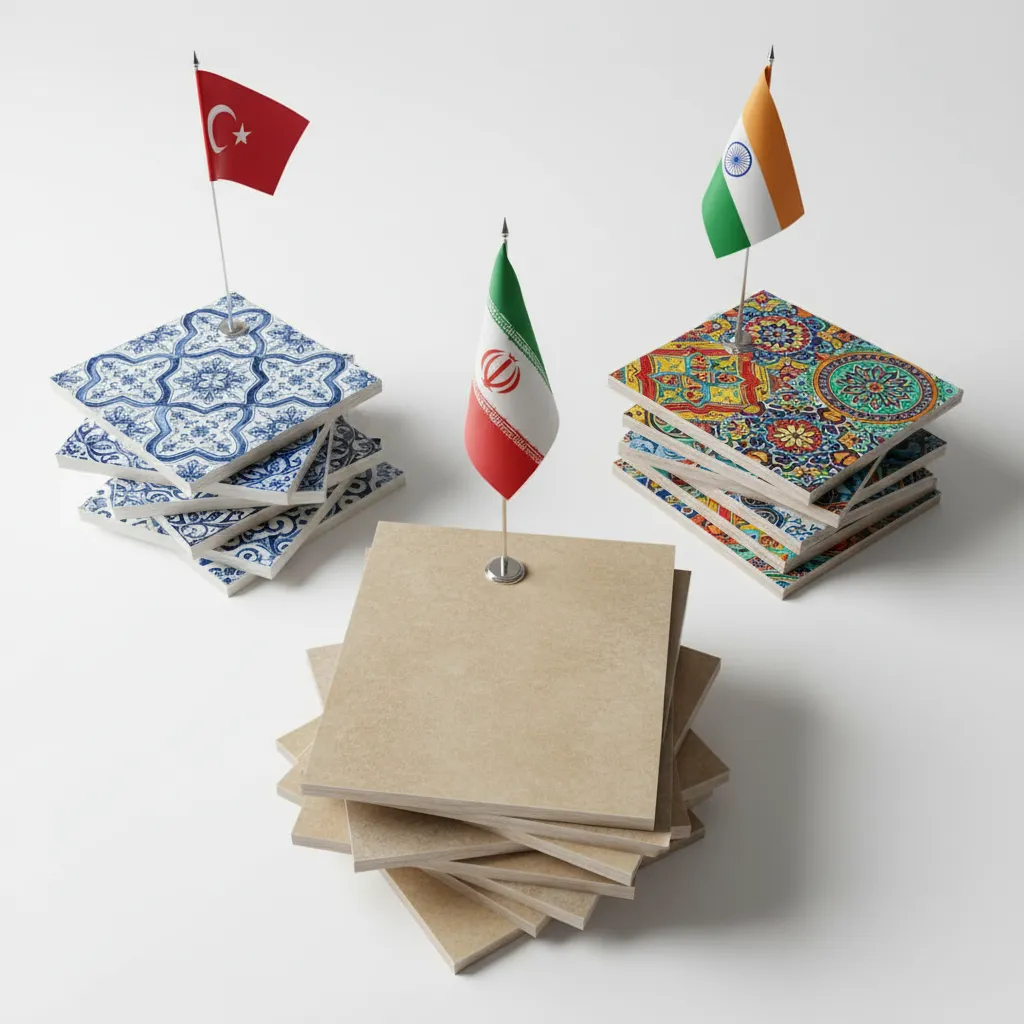
The Iran tile industry has earned global recognition for its precision engineering and versatile sizing options, catering to both traditional and contemporary architectural demands. As one of the world’s largest tile producer, Iran offers an extensive range of dimensions—from classic 30×30 cm formats to expansive 160×320 cm slabs—all manufactured under strict international standards. This article explores Iran tiles sizes, highlighting how manufacturers balance aesthetic flexibility with technical excellence to meet diverse global specifications. Whether for residential elegance or large-scale commercial projects, Iranian tiles deliver consistent quality through advanced rectified-edge technology and modular compatibility, making them a preferred choice for architects and designers worldwide.
Iranian Standard Tile Formats
Modern ceramic tile projects use a range of metric sizes, from small to large-format slabs. Common floor tile dimensions include 30×30 cm or 30×60 cm for bathroom floor and walls, and 60×60 cm to 100×100 cm tiles for living spaces. Larger rectangles like 60×120 cm slabs create a contemporary feel and give an impression of space thanks to the reduced number of joints, making them suitable for high-end or commercial floors. Traditional small tiles like 30×30 cm and 40×40 cm remain popular in residential and outdoor settings. In general, rectified edges and thin grout joints (≤2 mm) are used on modern tiles (especially large ones) to achieve seamless continuity.
Visual Impact and Feasibility
Tile size greatly affects room perception. In small rooms, large-format tiles make spaces feel larger because fewer grout lines yield a more open look. For example, 60×120 cm porcelain slabs with minimal joints can make a bathroom or kitchen appear bigger.
Conversely, small tiles can improve flow in compact bathrooms by allowing curvature around fixtures and reducing waste. Unique shapes and lay patterns also change a room’s character: diagonal layouts can make a narrow hall seem wider, and decorative border tiles can define large areas. From a project standpoint, tile size influences labor and cost: large tiles cover area faster but require very flat floors and special handling, while smaller tiles are easier to install on uneven surfaces but need more grout and cutting. Architects therefore choose sizes to balance aesthetics and practicality – picking a size that fits the room with minimal cuts and aligns with structural increments.
With this in mind, manufacturers craft Iranian tiles sizes that comply with international standards while addressing diverse customer requirements across residential, commercial, and architectural projects.
Installation Tips
Proper installation is critical for tile of any size, especially large formats. Installers must ensure the substrate is extremely flat – large tiles can magnify unevenness and lippage. During setting, use a high-quality thinset mortar, follow manufacturer guidelines, and align floor and wall tiles with care.
Key best practices include avoiding tiny cut-off pieces at thresholds and starting the layout from the entrance, aligning tiles with doors and fixtures. Dry-laying tiles before grouting helps check the pattern and prevents narrow strips or awkward cuts. Using spacers for consistent grout lines and following a stagger or herringbone pattern can also improve the final appearance.
Kavian Ceram’s Tile Sizes and Uses
Kavian Ceram is one of Iran’s leading ceramic tile exporters which offers tiles in a diverse range of sizes and designs to suit different applications. In their catalog:
- 60×120 cm: A large-format porcelain or white-body tile. Kavian’s 60×120 cm tiles are used on both floors and walls across many project types. The reduced joint lines give a contemporary, spacious effect. These tiles come in matte, polished, or high-gloss “nano-polish” finishes to match various styles.
- 100×100 cm: A full-square porcelain slab (1m²) for flooring. These huge tiles provide a bold modern look in open areas or luxury spaces. Kavian’s 100×100 cm tiles are typically matte or nano-polished, emphasizing the seamless quality of the space.
- 80×80 cm: A medium-large porcelain or white-body tile for floors. An 80×80 cm layout “can modernize any space”. Kavian offers 80×80 cm in glossy or nano-polished finishes; the rectified edges allow tight grout lines for a refined appearance.
- 60×60 cm: A standard floor tile. Kavian’s 60×60 cm tiles often have a thicker body for durability in exterior or commercial areas (usually matte glaze), and a sleek glossy version for interior floors. These tiles “make any room up-to-date” with minimal grout interruption.
- 40×40 cm and 30×30 cm: Smaller square tiles in matte finishes. These are ideal for compact bathrooms or toilets, where their modest scale fits small spaces without large cuts. (Notably, the 30×30 cm size is a traditional classic in many homes.)
- 30×60 cm and 30×90 cm: Rectangular wall tiles for interiors. The 30×60 cm and 30×90 cm formats are often used on bathroom walls, creating a clean look (they can also be mixed or stacked in patterns).
- 40×100 cm: Large-format wall tile for exterior or accent walls. Kavian’s 40×100 cm tiles (in white-body or porcelain) come in both matte and glossy glazes. Their length suits outdoor facades and large wall spans, giving a modern finish.
Each of these Iranian ceramic tile sizes serves a specific niche – for example, 60×120 cm slabs on floors and walls in big projects, versus small 30×30 cm tiles for tiny bathrooms. In sum, Kavian Ceram offers a diverse range of tiles in various sizes and designs, ensuring designers can choose the ideal size for both aesthetic and functional needs.
Conclusion
Tile selection is a balance of form and function. Iranian ceramic tile sizes (from 30×30 up to 60×120 cm and beyond) cater to everything from detailed mosaics to grand, seamless floors. Using the proper size can enhance a room’s look (large tiles enlarge small rooms), while careful installation practices ensure a high-quality, durable finish. Kavian Ceram exemplifies this variety with its broad catalog of tile dimensions and finishes, helping international clients find the right product for any project.
For more information on Iranian ceramic tiles and design trends, see our main article [Iranian ceramic tiles].
Frequently Asked Questions
1- What are common metric tile sizes?
Small tiles often start at 30×30 cm for bathroom floor. Mid-range walls use 30×60 cm or 60×90 cm. Modern designs frequently employ large formats like 60×120 cm, and ultra-large slabs for open areas. Kavian Ceram supplies tiles across this full spectrum to suit any space.
2- Why use large-format tiles?
Large tiles reduce grout lines, creating a cleaner, more open visual effect. For instance, a 60×120 cm porcelain tile can make a small space appear bigger due to fewer interruptions.
3- How do I avoid issues when installing large tiles?
Substrate preparation is critical. Floors should be leveled so they meet flatness standards. Use proper thinset mortar and follow the manufacturer’s method. Always dry-lay tiles, maintain consistent grout gaps, and use spacers.
4- What finishes do Kavian Ceram tiles have?
Kavian Ceram tiles come in both matte and glossy (polished or nano-polish) finishes, depending on the size and intended use. For example, their large 60×120 cm and 80×80 cm tiles are available in matte or high-gloss porcelain, while smaller floor tiles (40×40, 30×30 cm) typically use a durable matte glaze. Wall tiles (30×60, 30×90 cm) can be glossy to brighten interiors, and large wall slabs (40×100 cm) come in both matte and glossy options.